Kenya’s housing sector has long faced a simple but stubborn problem: too many people need homes, and too few affordable homes are being built. The Boma Yangu initiative was created to close that gap, and it has grown into one of the country’s most talked-about government housing platforms. Here’s a breakdown of what it is, why it exists, and what it’s achieved so far.
What Is Boma Yangu?
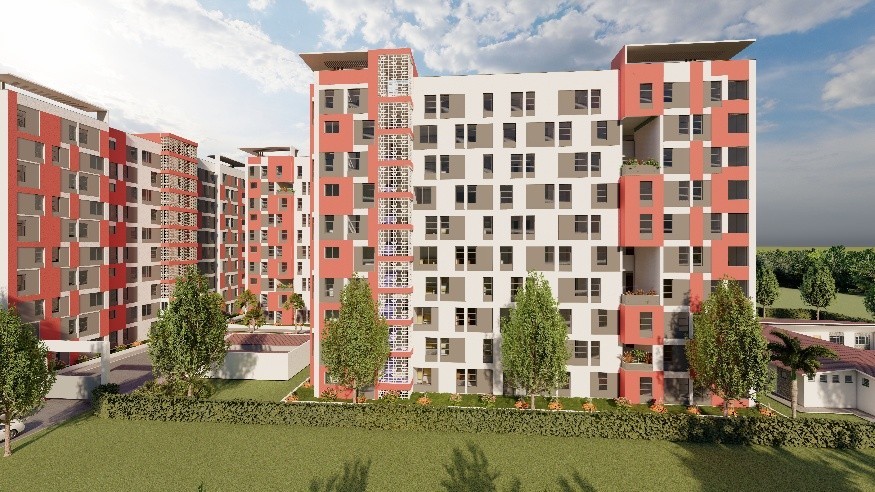
Boma Yangu (“My Home” in Swahili) is a digital portal that connects Kenyans to the government’s Affordable Housing Program and the Housing Fund. In simple terms, it’s the online front door to home ownership under the program — the place where people register, save toward a home, apply for a mortgage or the National Tenant Purchase Scheme, and eventually get allocated a unit.
What makes the platform notable is its accessibility. It isn’t limited to people with smartphones or reliable internet — it’s available through USSD, mobile web, and a full web portal, which means someone in a rural area with a basic phone can access the same system as someone browsing on a laptop in Nairobi.
Why the Program Exists
The numbers behind Kenya’s housing deficit explain why a program like this was needed. As urbanisation accelerates — roughly a fifth of Kenyans now live in cities, with urban populations growing over 4% a year — demand for housing has far outpaced supply. The country needs an estimated 200,000 new housing units every year, but only around 50,000 are actually built, leaving a shortfall of about 150,000 units annually. That mismatch has helped push housing prices up dramatically over the past two decades.
The Affordable Housing Program was designed to respond to this by making it easier — financially and logistically — for low- and middle-income households to access decent housing, rather than leaving supply and pricing entirely to the open market.

The Bigger Economic Picture
Boma Yangu isn’t just about putting roofs over heads; it’s framed as an engine for broader economic growth. A few of the intended ripple effects include:
Contribution to GDP — Real estate and construction were expected to roughly double their share of GDP as the program scaled up, with every dollar invested in housing estimated to generate one-and-a-half to three dollars of wider economic activity, plus new government revenue from permits and approvals.
Job creation — Construction is labor-intensive work. The program estimates that each housing unit built creates several direct jobs on-site and additional indirect jobs in supporting industries — everything from transport to materials supply.
Formalizing informal businesses — Through deliberate sourcing strategies, the program aims to bring Jua Kali artisans and small-scale material suppliers into the formal construction supply chain, giving informal-sector businesses a more stable and visible role in the economy.
How Far Has It Come?
According to the program’s own figures, Boma Yangu has made tangible progress: well over a hundred housing projects completed, more than 1.1 million people registered as applicants on the platform, several thousand Kenyans who have already become homeowners through the program, and hundreds of small and medium enterprises onboarded as suppliers.
What This Means for Everyday Kenyans
For an individual, Boma Yangu essentially digitizes and simplifies a process that used to be opaque and hard to navigate — saving for a home, understanding mortgage eligibility, and getting into a queue for allocation. For the country, it represents an attempt to tackle a structural housing shortage through coordinated policy, financing, and digital infrastructure rather than leaving it purely to market forces.
Whether the program closes Kenya’s housing gap at the scale it promises will depend on continued execution — but the framework itself reflects a broader shift toward using technology to make government services, like housing access, more transparent and reachable for ordinary citizens.